Call 1930 or use the portal? Which proof to save before you file, each screen on cybercrime.gov.in, and what the police and your bank do next.
- How do you file a cyber crime complaint online in India?
- If you lost money, call 1930 at once so banks can try to hold it. Then file on cybercrime.gov.in: log in with your mobile number and OTP, choose a category, describe the incident, upload evidence and save the acknowledgement number. If you are in danger right now, dial 112.
Where should you report: 1930, cybercrime.gov.in or 112?
Pick by what happened.
| What happened | Do this first | Then |
|---|---|---|
| Money left your account, wallet or card in the last few hours or days | Call 1930 | Call your bank, then file on the portal |
| Fake profile, hacking, harassment, sextortion threats, online fraud without money lost | File on cybercrime.gov.in | Report the account to the platform |
| Sexual images of a child, or rape or gang rape content online | Use the women and child section of the portal, which allows an anonymous report | Do not share or forward the content |
| A fraud call or SMS, but you paid nothing | Report it on Chakshu at Sanchar Saathi | Block the number |
| Someone threatens you in person, or you fear for your safety now |
The portal's home page says it plainly: "Any victim of financial cyber fraud can dial helpline number 1930". The helpline is part of the Citizen Financial Cyber Fraud Reporting and Management System, launched in 2021 to stop fraudsters moving money on. A Home Ministry reply in the Rajya Sabha in December 2025 said it had saved more than ₹7,000 crore across more than 23 lakh complaints, News On AIR reported.
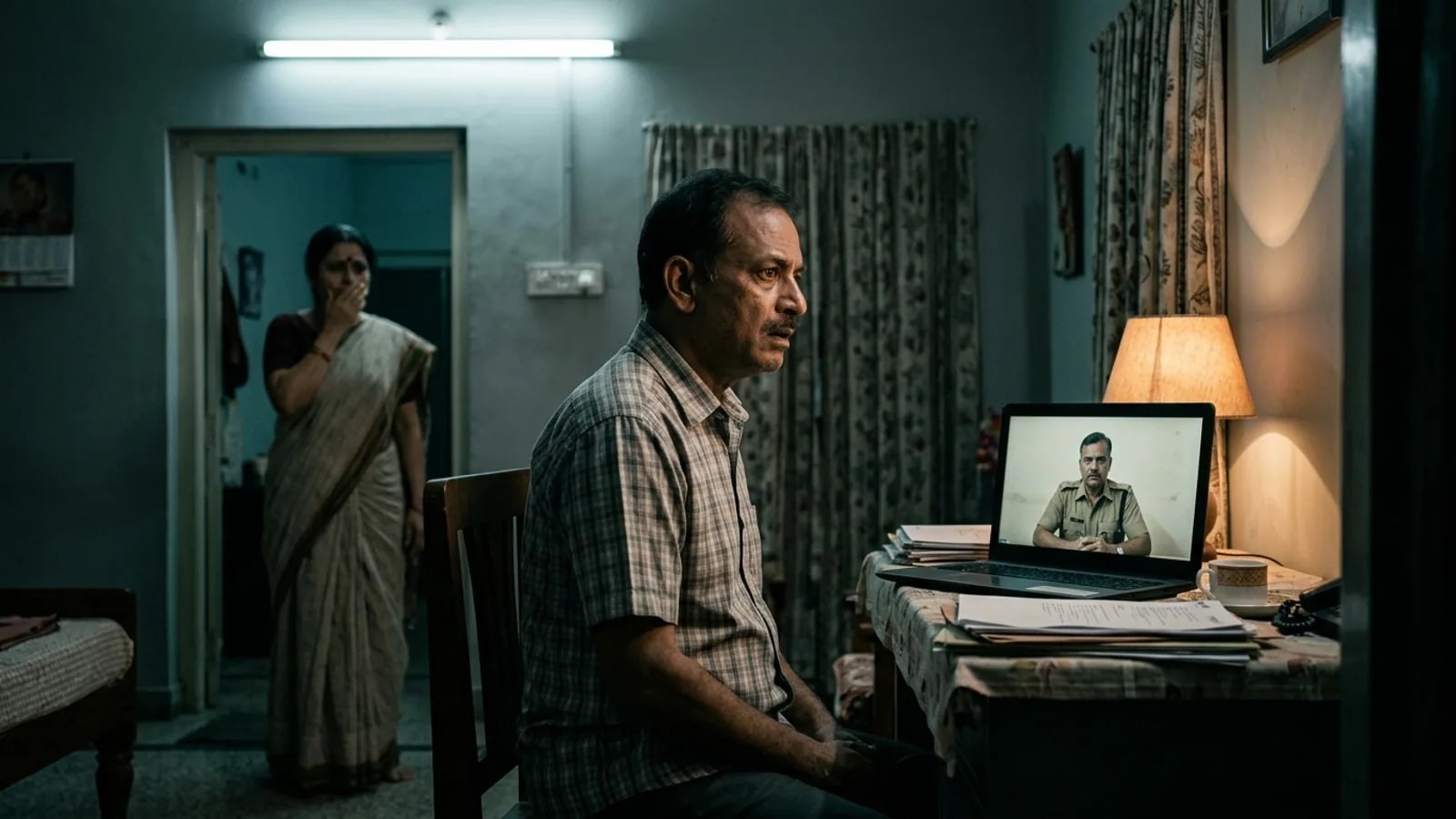
For emergencies, the Home Ministry has declared 112 the national number for police, fire and ambulance, Business Today reported in January 2026. If you are being held on a fake "CBI" video call, our post on the digital arrest scam covers the first hour.
What evidence should you collect before you report cyber fraud?
Collect first, block later. Scammers delete accounts and chats once they know you are reporting.
The portal's FAQ lists what counts as evidence, from bank statements, transfer receipts and emails to web page URLs, chat transcripts, images and videos, and even the envelope if something came by courier.
Save these as files in one place:
- Screenshots of the profile or page, with the full URL or the profile ID visible. Usernames change; the ID in the link usually stays.
- The whole chat, exported or screenshotted from start to end, including the messages that made you trust them.
- Every transaction ID or UTR number. UTR means Unique Transaction Reference, the code your bank or UPI app shows in the payment details.
- A bank or wallet statement covering the dates, with the fraud entries marked.
- Phone numbers and call logs, with dates and times of each call.
- A short written timeline: first contact, what they said, each payment, when you realised.
Keep the date and time visible on screenshots. When you upload a file, the portal gives it a hash value, a fixed string that works like a fingerprint and shows the file was not changed later, its FAQ explains.
How do you file a cyber crime complaint online in India on cybercrime.gov.in?
These steps match the portal as of November 2026 (Version 2.0, updated 9 November 2026).
Log in
- Open cybercrime.gov.in and click Register a Complaint.
- Read the terms, tick the box and click I Accept.
- A box titled "Please Keep this Information Ready Before Filing Your Complaint" appears. Read it and click I Understand.
- On the User Login screen, enter your mobile number, tap Get OTP, type the OTP and the captcha, and click Login. The FAQ says you register with your name and a valid Indian mobile number, and the OTP stays valid for 30 minutes.
Fill in the complaint
- Choose the type: the women and children section, or the general cyber crime complaint. Then pick the category and sub-category closest to what happened. Fields marked with a red asterisk are mandatory.
- Give the incident date and time and the details. The portal's checklist asks for at least 200 characters and no special characters such as # $ @ ^ * ~ or |. Write it in plain sentences, in order.
- For a financial crime, enter the bank, wallet or merchant name, the transaction ID or UTR, the date and the amount for each payment.
- Add suspect details if you have them: URLs, social media handles, phone numbers, email IDs, bank accounts or a photo.
- Upload your ID (JPEG or PNG, up to 5 MB) and your evidence (up to 10 MB per file), as the checklist states.
- Select the state or union territory carefully. The FAQ says the police of the state you pick handle the complaint.
Reporting anonymously
The women and child section has two options, Report Anonymously and Report and Track. The anonymous option is only for child sexual abuse material and rape or gang rape content, and needs no personal details, according to the FAQ. The anonymous form runs in three tabs: Incident and Complainant Details, Suspect Details, then Preview & Submit.
What happens after you file a cybercrime.gov.in report?
Your complaint goes to the police of the state or union territory you selected, who may call you for more detail.
To follow it, open Track Your Complaint on the status page, enter the acknowledgement number, then the OTP and captcha. The results show the action taken by police, including whether an e-FIR or FIR has been registered and the investigating officer's details, and a separate status from the bank or wallet.
The acknowledgement number is not an FIR. Some complaints become FIRs, and a general complaint can be withdrawn only before that happens, the FAQ notes. Complaints in the women and child section cannot be withdrawn. The portal does not publish a deadline for police action.
For larger frauds there is a faster route in Delhi. Since May 2025, under the e-Zero FIR pilot, complaints above ₹10 lakh made through 1930 or the portal become a Zero FIR at Delhi's e-crime police station, and you can visit the cybercrime police station within three days to convert it into a regular FIR, Outlook Money reported.
What should you tell your bank, and how fast?
Call your bank's official number the same day, ask it to block the card, UPI or net banking, and give it your 1930 or portal reference number.
The RBI's 2017 circular on unauthorised electronic transactions sets the clock:
| When you tell the bank | Your liability |
|---|---|
| Within three working days | Zero, where the fault lies with neither you nor the bank |
| Four to seven working days | Capped at the lower of the amount or ₹5,000 to ₹25,000, depending on the account (RBI) |
| After seven working days | As per the bank's board-approved policy |
The same circular says the bank must credit the disputed amount within 10 working days of your report and settle the complaint within 90 days. It covers transactions you did not authorise. If a scammer talked you into sending the money yourself, ask the bank in writing how it will treat your case.
For your phone line, Sanchar Saathi has three useful services: Chakshu to report fraud calls, SMS and WhatsApp messages, Block Your Lost/Stolen Mobile Handset to block a stolen phone on all Indian networks, and Know Mobile Connections in Your Name to find SIMs you never took. Chakshu is not for money already lost; the site sends you to 1930 for that.
A fake profile is using your photos: what else should you do?
Report the account to the platform as well. The police complaint does not remove it for you. The portal's Report Abuse to Social Media page links the reporting forms of Facebook, X, Google, Instagram, Telegram, WhatsApp and YouTube.
Impersonators often copy photos to more than one profile. FaceSearch can show other public pages where your face appears, so you can attach those URLs to your complaint. It covers the public web only, cannot see private accounts or chats, sometimes shows look-alikes, and never tells you who someone is. The steps for each platform are in our guide to a fake account using your photos, and the IT Act offences behind such complaints are on is face search legal in India. This is general information, not legal advice.
More situation-by-situation checks are in our use cases hub.
frequently asked
- Can I still file a complaint if the fraud happened weeks ago?
- Yes. The portal's anonymous form even has a field for the reason for delay in reporting, as seen on the portal. A late report still helps police link accounts across cases. The chance of a bank holding your money falls with every hour, though, so call 1930 the moment you notice a loss.
- Can I report if I live abroad or the scammer is a foreign company?
- Yes, says the portal's FAQ: Indian citizens hit by a foreign person or company can file, and so can non-citizens hit by someone in India. The catch is login. Registration needs a valid Indian mobile number for the OTP, so make sure you can receive an SMS on an Indian number before you start.
- Will I get my money back after filing on cybercrime.gov.in?
- Sometimes, partly. Money still sitting in the receiving accounts when police and banks act can be held and later returned through the bank and legal process. Money already withdrawn as cash or moved through many accounts is far harder to trace, which is why the first call to 1930, the helpline on the cybercrime portal, matters most.
- Do I need to go to the police station at all?
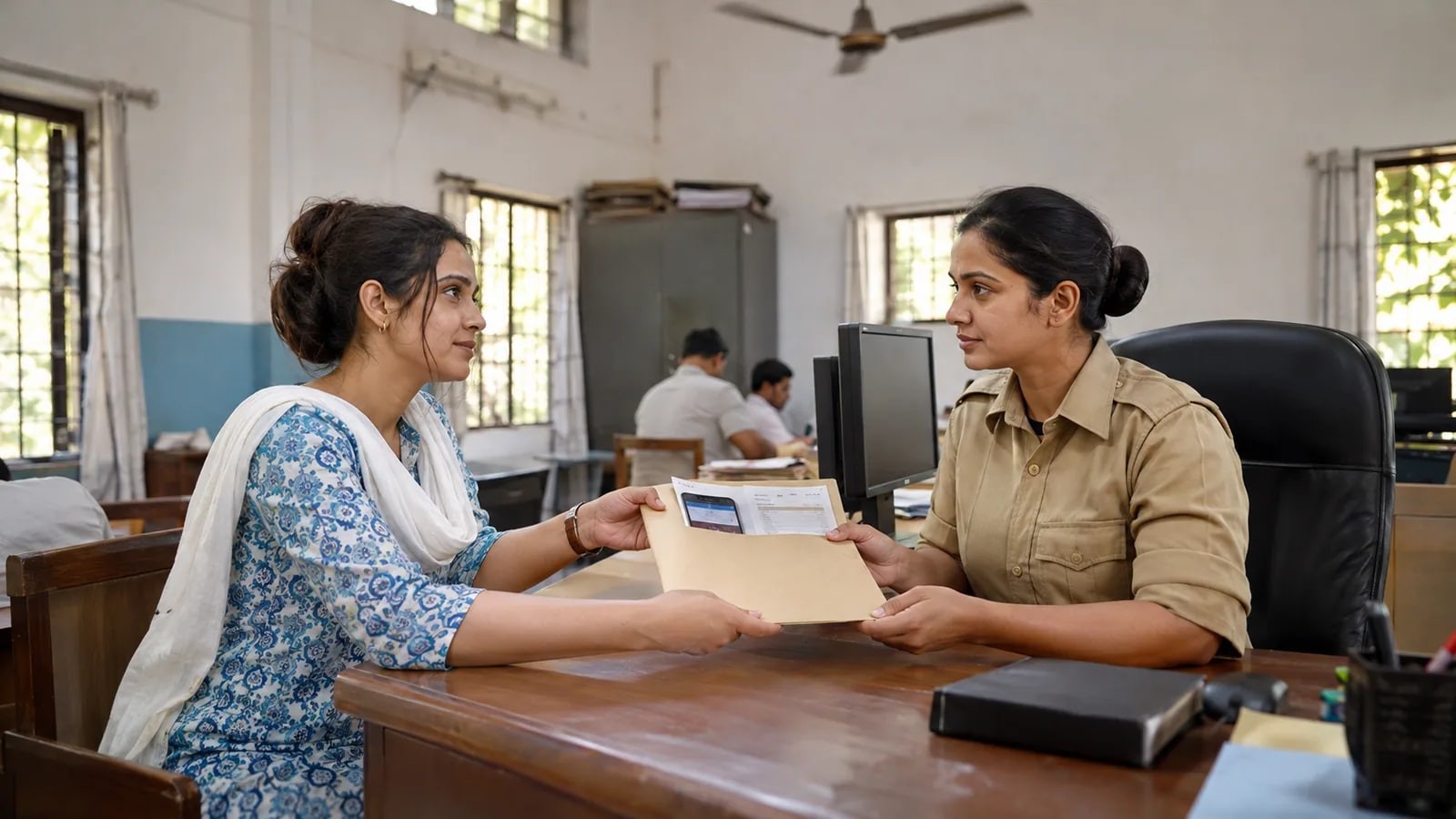
- Not to file. The whole complaint can be made online, and the police of the state you chose may contact you for a statement or original documents. If you need an FIR copy, take your acknowledgement number and printed evidence to your local cyber cell.
- cyber crime complaint
- india
- 1930
- cybercrime.gov.in
- cyber fraud
Written by
The FaceSearch Team
Product & Research, FaceSearch
We build FaceSearch, the face search engine that shows where your photos appear on the public web.