Fake brides on conference calls, NRI grooms stuck at customs, AI photos. How the 2026 matrimonial rackets ran, and the checks that catch them before you pay.
- How do matrimonial scams in India work, and how can you check a profile?
- The matrimonial scams in India that police broke up this year share one script: borrowed or AI-made photos, a story built to please the family, then a run of fees, gift duties or investment tips. Before money or trust moves, search the photos, insist on a live video call with family present and confirm the job independently.
What should you do first if you've already paid?
If money has left your account, speed matters most. Do these in order, today.
- Call 1930, the national cyber fraud helpline listed on the cybercrime portal. It can get the transaction flagged with the banks while the money may still be held.
- File a complaint on the National Cybercrime Reporting Portal and keep the acknowledgement number. Attach screenshots, chat exports and every transaction ID.
- Call your bank the same day with the same details.
- Stop all contact. Do not pay a "refund fee" or a "release charge" to get money back. That is the same scam, one more time.
- Report the profile on the matrimonial site, so the next family does not meet it.
You were targeted by people who do this for a living. Reporting is how their call centres get found.
How does a matrimonial scam in India actually work?
Most cases this year take one of two shapes.
The fake bride call centre
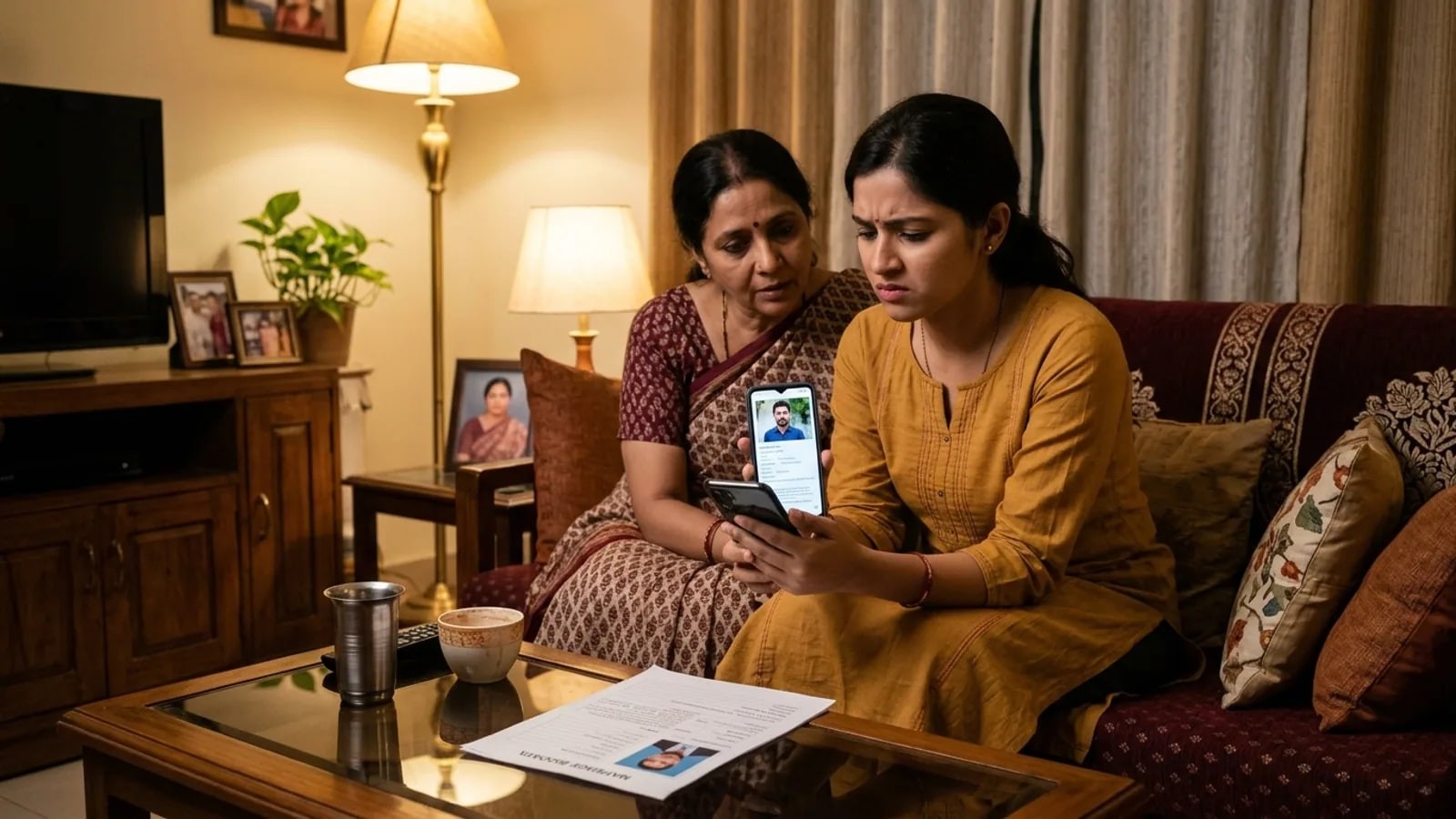
In September 2026, Delhi Police raided a call centre in an Agra apartment that ran as "Shaadi Partner", PTI reported in Deccan Chronicle. Tele-callers sent men photos of women found online as prospective brides. Another employee then posed as the bride on conference calls, and after some days the "bride" rejected the match, citing reasons such as Manglik dosh.
Victims paid in stages for registration, file activation, a security deposit and membership, from ₹2,500 to ₹15,000 each, a cap police called deliberate. They said victims could number in the thousands, the same PTI report says.
In June 2026, Kanpur police broke up three similar call centres, according to a PTI report in ThePrint. Police said the gang used AI-generated and digitally edited photos of women for the profiles. It charged plan fees of ₹3,000 to ₹10,000 and sent fake screenshots showing the bride's side had paid too. The complainant had lost nearly ₹4 lakh. The case was registered under Section 318(4) of the Bharatiya Nyaya Sanhita (cheating) and Section 66D of the IT Act (cheating by personation using a computer).
The NRI groom and the customs fee
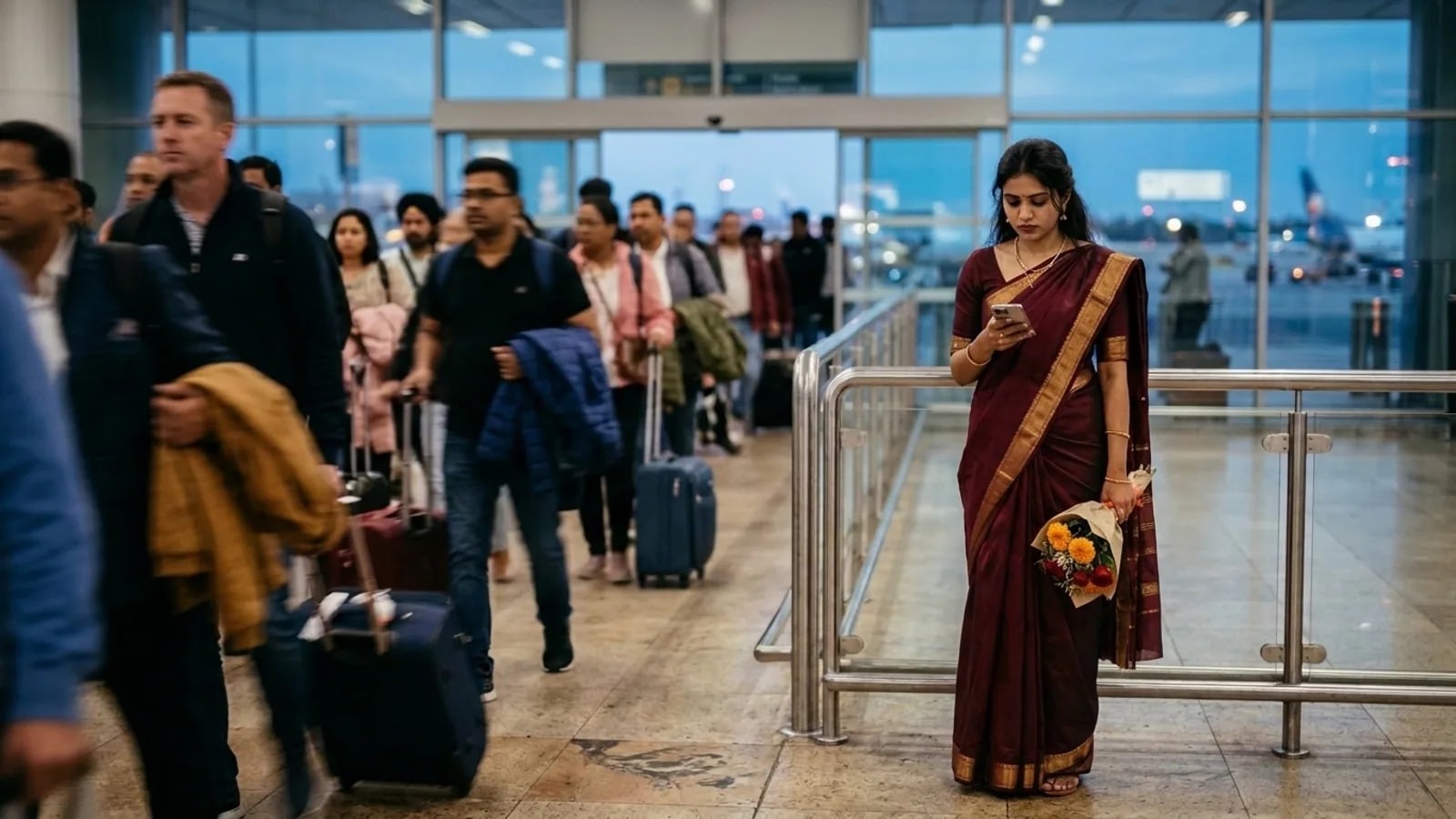
A 29-year-old woman in Mumbra lost ₹6.75 lakh between February and March 2026 to a man who said he lived in the UK, the Free Press Journal reported. They met on a matrimonial site and moved to WhatsApp. He then claimed customs at Delhi airport had seized his gold and foreign currency, and a woman posing as an immigration officer called her to press for "fines and clearances".
The pretext changes from case to case. A real customs department does not collect duty through a personal UPI ID or a stranger's bank account.
What are the red flags of a fake matrimonial profile?
None of these proves a scam alone. Two or three together should stop you.
- Photos that look like a shoot. Studio light, a backdrop, or skin that looks too smooth. Many genuine profiles use ordinary photos taken at home or at a family function.
- A job you can't see. Doctor in London or engineer in Toronto, with no way to confirm it.
- A camera that never works. Calls get cancelled, or the face is frozen, blurred or shown for seconds.
- Speed. Talk of marriage within days and pressure to move to WhatsApp or Telegram.
- Fees on the bride's or groom's behalf. A bureau asking for activation, deposit or meeting charges before you have spoken to the family directly.
- Any money request. Customs on a gift, a visa, a medical emergency, a ticket, or a trading app that "doubled my savings".
Cyber police in Mumbai warned in June 2026 that scammers now use AI-generated photos, deepfake videos and voice cloning, and even simulated live video calls, the Free Press Journal reported. Their point: seeing and hearing someone no longer proves they are real.
How do you check a profile in 5 minutes?
Run these before you share your number or address.
- Screenshot the clearest photo. Pick a front-facing one with no group or heavy filter, and crop it to the face.
- Run a reverse image search. Google Lens or Bing Visual Search finds copies of the same picture, such as a stock photo or a model's portfolio.
- Run a face search. This looks for the same face in other photos on public pages, which catches borrowed faces even when the exact picture is new.
- Book a live video call with family on both sides. Ask the person to wave, turn their head fully to the side and hold up a handwritten note with today's date. Pick a time that suits their stated city.
- Confirm the story outside the app. An employer's website, a LinkedIn profile under the same name and city, and a parent's phone number you call yourself.
For step three, FaceSearch checks one face against public web pages, and the first search is free with no account. It only sees public pages, so it cannot look inside Shaadi.com, Jeevansathi or BharatMatrimony, or any private account. A match is a similar face on a page, not proof of who someone is, and look-alikes do happen. No result is normal for private people, and AI-made faces often return nothing.
Our matrimonial profile photo check explains how to read each result. Use it only to decide whether to trust someone you are dealing with. Do not contact the person whose photos were borrowed or share what you find beyond a report, as our acceptable use rules set out.
What does a Shaadi or Jeevansathi verified badge actually prove?
Each badge checks less than most families assume.
| Platform | What its help page says the badge checks | What it does not tell you |
|---|---|---|
| Shaadi.com blue tick | A selfie is matched with the profile photo (Shaadi.com Support) | That the job, income, city or intentions on the profile are true |
| Jeevansathi Govt ID | PAN, Aadhaar, passport or other ID details matched with the profile (Jeevansathi) | That the person messaging you on WhatsApp is the account holder |
| Jeevansathi Verified by Visit | An executive visits and checks documents such as date of birth, income and qualification (Jeevansathi) | What happens after the visit, or any money request |
Checked on 11 November 2026 against the Shaadi.com and Jeevansathi help pages. A badge is a reason to keep talking, never a reason to send money.
How do you report a Jeevansathi fake profile or a Shaadi scam?
Collect evidence before you report, because fake profiles often vanish once flagged.
- Save profile screenshots with the profile ID, chat exports from WhatsApp, call logs, UPI and bank transaction IDs, and any fee receipts from a "bureau".
- Report the profile on the platform with its profile ID, and say plainly that it asked for money or used someone else's photos.
- File on cybercrime.gov.in for fraud, extortion or impersonation, and call 1930 if money moved. Keep the acknowledgement number.
- Visit the local cyber cell with that number if you need an FIR.
If the photos belong to a real person, they are a victim too. Our guide on how to report a fake profile covers what platforms ask for, and the use cases hub has checks for other situations.
frequently asked
- Is it safe to put my own photos on a matrimonial site?
- Yes, with care. Use photos you have not posted elsewhere, so a stolen copy is easier to trace back to the site. Avoid pictures that show your house number or car plate. Share your phone number and address only after a video call and a family-to-family conversation.
- Will I get my money back if I report it quickly?
- Not always. A fast report to the national helpline gives the banks a chance to hold money that has not yet been withdrawn, which is why the first hours matter. Money already moved through several accounts is harder to trace. Report anyway: each complaint helps police connect cases that look small on their own.
- Should I confront the person or the bureau before reporting?
- No. Confronting them warns the operator, who can delete the profile, block you and move the money on. Save your evidence first, report to the platform and the cybercrime portal, and only then block the number. Do not agree to pay anything to settle or withdraw a complaint.
- matrimonial scam
- india
- fake profile
- nri fraud
- 1930
Written by
The FaceSearch Team
Product & Research, FaceSearch
We build FaceSearch, the face search engine that shows where your photos appear on the public web.